
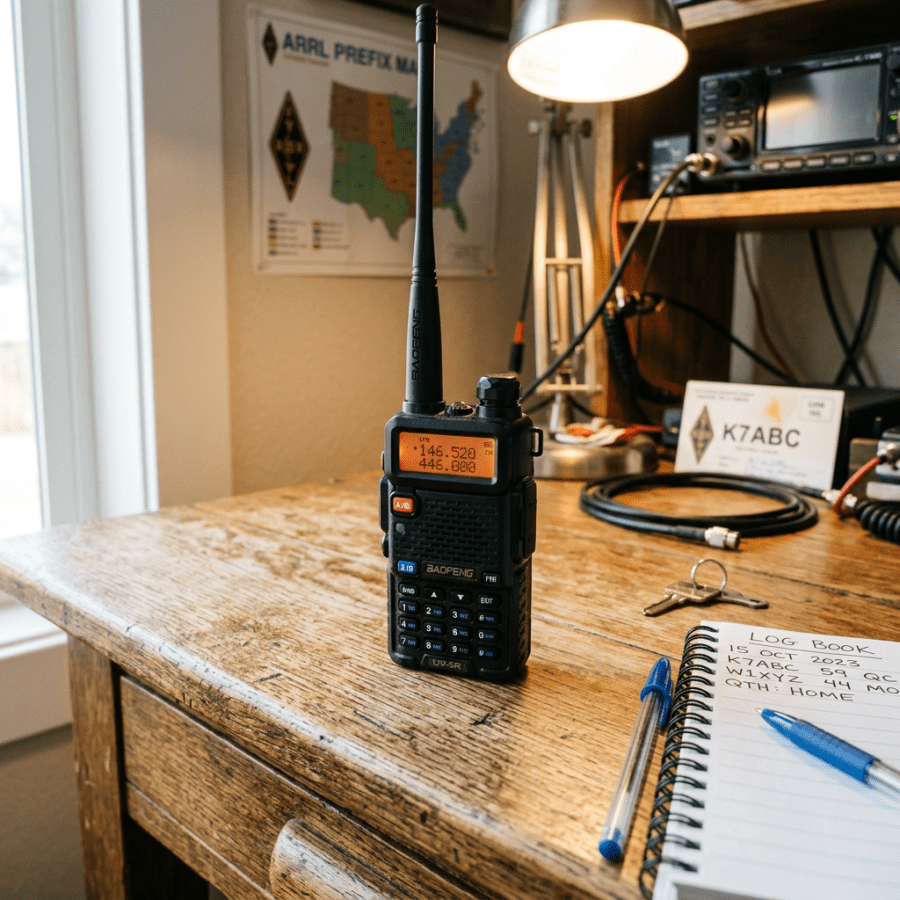
I recently became an amateur radio operator, or “ham,” because I wanted to help with communications during emergencies. One of the big draws is that when phones go down—including cell phones, which often do in a disaster—you can still operate a ham radio. With a license, you can stay in touch with family or friends who are also licensed operators. If someone you need to reach isn’t on the radio, another ham can relay a message. You can talk by voice, send data through a computer, or even use GPS-based systems to pass information along.
The hobby goes beyond emergencies. For example, licensed operators can sometimes talk with astronauts aboard the International Space Station who also use ham radios (NASA, 2023). There’s also a technique called “moonbounce,” where signals are bounced off the moon to reach someone on the other side of the world—up to about 12,000 miles away (ARRL, 2024). And with the right setup, you can connect through satellites. It’s a mix of science, problem-solving, and communication.
At its core, amateur radio is about people connecting with each other locally or across the globe. Some use radios they bought off the shelf, while others build their own. Computers and the internet can play a role, but the heart of it is radio waves and the people who use them. In many disasters, amateur operators are among the first to help with emergency communication when traditional networks fail (FEMA, 2022).
Getting on the air requires a license from the Federal Communications Commission. That means taking an exam, but the test is very doable with some study. The FCC has set aside specific frequencies, called the Amateur Bands, just for this purpose. These cover a wide range, starting just above the AM broadcast band and reaching up into very high microwave frequencies (FCC, 2024). There’s room for experimenting, learning, and a lot of different styles of communication.
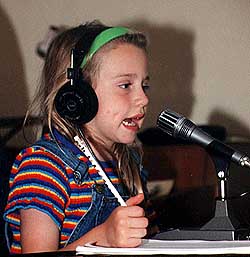
There’s also no age limit. I’ve met licensed operators as young as six years old. That’s part of the appeal—it’s a hobby that opens the door to science and technology for kids, but it also has serious applications when things go wrong.
If you’re curious about learning more, or even getting licensed yourself, the American Radio Relay League (ARRL) has a good starting point: http://www.arrl.org/getting-licensed.
This is for information only. It’s not medical advice, and if you have health questions, please talk to your own provider.
Scott Rennie, D.O.
Board Certified in Obesity Medicine and Family Medicine
This blog is for educational purposes only and does not constitute individual medical advice. Always consult your own physician before making changes to your health, medications, or treatment plan.
Twitter: http://twitter.com/doctorrennie
Sources:
-
American Radio Relay League (ARRL). “Getting Licensed.” ARRL, 2024. http://www.arrl.org/getting-licensed
-
Federal Communications Commission (FCC). “Amateur Radio Service.” FCC, 2024.
-
NASA. “Amateur Radio on the International Space Station (ARISS).” NASA, 2023.
-
Federal Emergency Management Agency (FEMA). “Amateur Radio.” FEMA, 2022.
 Doctor Rennie's Blog