

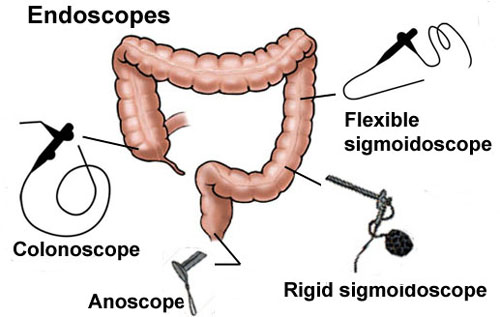
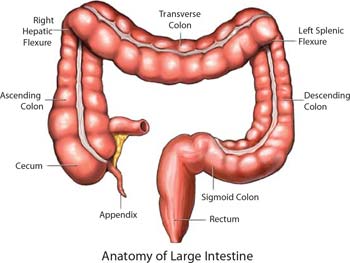
Photo credit: http://www.naturalhealingsolutionsllc.com/learn-about-colon-hydrotherapy.html
Photo credit: http://www.thenurseslockerroom.com/2013/03/sigmoidoscopy-screening-test-for.html
One of the more common problems that brought patients in to see me, believe it or not, was seeing blood in the toilet, on the stool, or on the toilet paper after a bowel movement. Since I had seen several patients about this, I thought I would write about some of the possible causes.
Healthcare providers take this seriously, because blood noticed after a bowel movement can sometimes be a sign of colon or rectal cancer. Fortunately, most causes of rectal bleeding are not cancer.
Causes of rectal bleeding:
- Hemorrhoids: Swollen blood vessels in the rectum or anus can cause itching, pain, and bleeding. Patients usually describe hemorrhoidal blood as bright red. It may coat the surface of the stool, drip into the toilet and turn the water red, or show up on the toilet paper. Hemorrhoids do not have to hurt. Painless rectal bleeding during a bowel movement is a common presentation.
- Anal fissure: A tear in the lining of the anus can bleed, and there may be pain with a bowel movement.
- Other causes include infection, colitis (which may be due to an autoimmune disease such as ulcerative colitis or Crohn’s disease), colon polyps, and colon cancer. If the bleeding comes from higher in the digestive tract, such as in or above the stomach, the blood may look dark black or tarry.
Diagnosis and testing: To find the cause of bloody stools, your provider may perform tests or refer you to a specialist. They will take into account the information you give them, your history, your symptoms, and your age.
1) Rectal exam: Your provider will usually examine the rectum and look for a source of bleeding such as a hemorrhoid or fissure. This may include a digital rectal exam, where the doctor inserts a gloved and lubricated finger into the rectum to feel for possible rectal cancers.
2) Anoscopy: Your doctor may use a small plastic device with an attached light to get a better look at the source of bleeding. Most of the time this is not painful, though it can be a bit uncomfortable, and it can be done in the office.
3) Sigmoidoscopy: This is usually done in an outpatient center, and the patient is usually not sedated. Sigmoidoscopes come in rigid and flexible forms, and the flexible one is used most often. A flexible tube, roughly 70 cm long and 1 cm wide, carrying a tiny video camera and a light, is inserted through the anus and gently into the colon while air is introduced to open the area and improve the view. A biopsy is often taken with a small tool. Sigmoidoscopy allows visualization of the anus, rectum, sigmoid colon and the top of the descending colon. It does not reach the entire colon, so it can miss cancers, polyps or bleeding sources in other areas.
4) Colonoscopy: Similar to sigmoidoscopy, but it allows the doctor to examine the entire colon with a longer flexible tube. The colonoscope, about 140 cm long, reaches everything the sigmoidoscope can and also allows visualization of the transverse colon, ascending colon and cecum. The patient is usually sedated.
When to seek help: It is impossible to know the cause of rectal bleeding without an examination. Everyone with rectal bleeding should talk to their healthcare provider about what evaluation they need. Even though there are common causes that are not cancerous, bleeding can be caused by cancer or by precancerous conditions.
Precancerous polyps may sit in the colon for years before turning cancerous, and they can be removed safely, which prevents them from ever becoming cancer. These polyps can produce symptoms very similar to an innocent hemorrhoid.
I’ve met patients who have ignored rectal bleeding for years because they thought it was because they had a hemorrhoid and it turned out to be cancer. With increasing age comes increasing risk of polyps and colon cancer.
Colon cancer screening: For patients at average risk, screening was started by checking the stool for small amounts of blood, which may be hidden, each year beginning at age 50. A first colonoscopy at age 50 was also recommended, unless other risk factors were present, and every 10 years thereafter unless a person was at increased risk based on family history or a previous diagnosis or biopsy result.
Update, 2026: The starting age has changed since this post was written. The American Cancer Society lowered it to 45 for people at average risk in 2018, the U.S. Preventive Services Task Force adopted 45 in 2021, and the ACS reaffirmed age 45 in its 2026 guideline update, with screening continuing through age 75 for those with a life expectancy over 10 years. If you are 45 or older and have not been screened, talk to your provider. See https://www.cancer.org/cancer/types/colon-rectal-cancer/detection-diagnosis-staging/acs-recommendations.html
People at increased or high risk:
If you are at increased or high risk of colorectal cancer, you should begin screening before the standard starting age, be screened more often, or both. The following raise your risk above average:
- A personal history of colorectal cancer or adenomatous polyps
- A personal history of inflammatory bowel disease (ulcerative colitis or Crohn’s)
- A strong family history of colorectal cancer or polyps
- A known family history of a hereditary colorectal cancer syndrome such as familial adenomatous polyposis (FAP) or hereditary non-polyposis colon cancer (HNPCC)
Board Certified in Obesity Medicine and Family Medicine
This blog is for educational purposes only and does not constitute individual medical advice. Always consult your own physician before making changes to your health, medications, or treatment plan.


 Doctor Rennie's Blog