Urine Drug Testing: An Underused Tool
The use of prescription opioids has increased over the last 10 years as an accepted method for treating chronic noncancer pain.1 Concurrently, there has been a greater incidence of prescription drug abuse as demonstrated by epidemiologic, emergency room, and treatment admission data.1 The challenge of using opioid analgesia therapy lies in balancing 2 important public health concerns2:
- Responding to the huge unmet need of relieving chronic pain
- Preventing the abuse of opioid medications
|
 Treatment principles courtesy of the NIPC faculty
View Large Algorithm
Download the PDF
Treatment principles courtesy of the NIPC faculty
View Large Algorithm
Download the PDF |
Physicians have long been apprehensive regarding the use of this therapy because of the misuse of opioids (eg, addiction, diversion, abuse), tolerance, cognitive effects, and dependence. These have all contributed to the underutilization of opioid therapy.2Physicians caring for patients with chronic pain often struggle to provide adequate pain control while avoiding the risk of substance abuse.3One method that should be considered as part of the overall patient monitoring and treatment plan is the use of urine drug testing (UDT).There are a variety of biological specimens used in performing laboratory drug testing, including urine, blood, sweat, saliva, hair, and nails. Each provides a different level of sensitivity, specificity, and accuracy. Urine is most often the preferred test substance due to ease of collection. Concentrations of drugs and metabolites also tend to be high in urine, allowing longer detection times than concentrations in the serum.4A closer look at UDT options
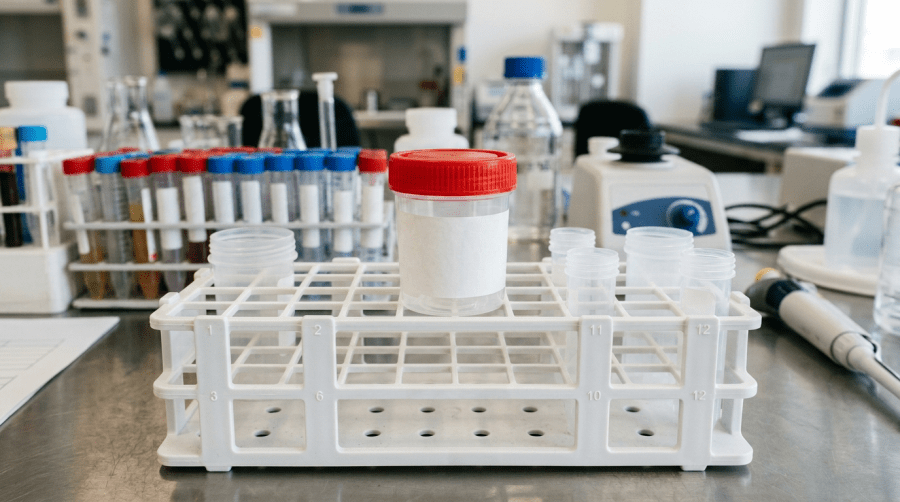
Ensuring adherence by determining the presence of prescribed opioids and monitoring the use of nonprescribed or illicit substances are 2 important goals of UDT in the population receiving opioid therapy for chronic pain.5Two types of UDTs are typically used: immunoassay and gas chromatography–mass spectrometry (GC-MS).Immunoassays use antibodies to detect the presence of specific drugs or metabolites and are the most common method used for the initial screening process. Advantages of immunoassays include not only their relatively low cost, small sample sizes, and rapid turnaround, but the fact that these tests can be done at the point of care by minimally trained staff. The principal disadvantage of immunoassays is their relatively low specificity and the potential for receiving false-positive results, which require a second test for confirmation. Results of immunoassays are always considered presumptive until confirmed by a laboratory-based test for the specific drug (eg, GC-MS or high-performance liquid chromatography).GC-MS is highly sensitive and specific, yet even GC-MS can fail to identify a positive specimen (eg, hydromorphone, fentanyl) if the test column is designed to detect only certain substances (eg, morphine, codeine).4
Ensuring that testing is done at the proper intervals
It is generally accepted that urine drug testing should be conducted at the initiation of treatment and at specified intervals thereafter as one of several means to predict poor compliance with opioids and continued illicit drug use.1,6 It is also indicated when a patient changes medication regimens, exhibits aberrant opiate use behaviors, or shows a decline in function.
For a patient on a stable treatment regimen, it is recommended that urine testing be performed randomly and based on individual risk assessment.1,7 When unexpected findings are identified on a screening immunoassay, a GC-MS should be performed to confirm and detail the findings.
Testing isn’t done often enough
Although UDT is generally recommended, one study reports that family practice physicians obtained urine drug tests in less than 2% of their chronic pain patients receiving opioid therapy.3,8 To date, UDT is voluntary and physicians may incorporate it into their practices as they see fit. However, this will change in Florida with the passage of SB 462, the prescription drug monitoring bill that requires mandatory urine drug testing (at the initiation of medication prescription and twice yearly thereafter), medical record documentation of testing, assessment planning, informed consent, and periodic review of therapeutic objectives.2
While addiction centers have adopted UDT as a standard, chronic pain clinics, internists, and family practitioners have yet to duplicate this practice.9 This may be due to a lack of understanding about the uses or interpretations of UDT.
A 2008 survey at the American Congress of Pain Medicine questioned 99 attendees about their urine testing practices for patients on opioid therapy. The survey revealed that the majority of urine testing was driven by clinicians’ desire to detect undisclosed or illicit substances rather than an interest in evaluating appropriate opioid use.2
A panel for drug toxicology
To address the use of illicit substances, several authors have suggested a panel for drug toxicology in pain patients that includes cocaine, amphetamines, opiates, methadone, and marijuana.1 Interestingly, it is not a problem for the majority of patients taking illicit substances to provide a negative sample because they are usually able to abstain before an upcoming appointment even if they use an illegal drug recreationally. Patients unable to provide a clean urine sample demonstrate an inability to control use, increasing the suspicion of substance abuse or even addiction.1
What UDT can, and can’t, tell us
Some have erroneously suggested that UDT can determine not only if the patient is taking the prescribed drug, but also whether he/she is taking the prescribed dose.10 This is incorrect, since most opioids are eliminated by drug-metabolizing enzymes and transported by systems that show a substantial degree of intra-individual variability.3 Therefore, elimination rates at any one point in time will fluctuate.11
Additionally, urine pH changes based on the time of day a medication is taken. This can produce a large variability in urine drug concentrations as well as analytical variability (especially with immunoassays).3 Absorption and distribution may vary from patient to patient and, thus, similar doses will not result in similar systemic exposure (eg, drug concentration at the site of effect) or similar pharmacologic effects.
A word about false negatives
Attention must also be paid to drugs that do not appear in a urine test. While a negative test may suggest that the patient is nonadherent or may be diverting drugs, there are other possible explanations for such results, including human error, bacterial contamination, or mislabeling. Importantly, false negatives may occur when testing cutoff rates appear at a subthreshold level (ie, if the cutoff rate for an opioid is 50 ng/mL and the urine test detects 49 ng/mL, test results will turn out “negative” for that particular opioid).2
Generally, a diagnosis of addiction should never be made based on the results of urine toxicology alone and should be considered within the context of aberrant medication use, drug-seeking behaviors, and unimproved or declining function.1,12 Despite their limitations, UDTs provide additional information beyond behavioral monitoring. A recent study found that monitoring urine toxicology was more effective at identifying patients with problems than monitoring behaviors alone, and monitoring behaviors alone would have resulted in missing approximately half of the patients with problems.9
A “problem” was defined as the presence of either a positive illicit urine toxicology screen or behavioral issues such as reports of lost or stolen prescriptions, consumption in excess of prescribed dosage, visits without appointments, multiple drug intolerances and allergies, and/or frequent telephone calls. The probability of a problem was greatest in the younger patient groups, with 61% of the patients younger than 40 years and 30% of those older than 60 years having a problem (P=.001).9
When opioid misuse is suspected based on urine toxicology screening, it is important to further assess and address the basis of misuse and refer the patient for appropriate care if mental health problems, addiction, or other health issues appear to contribute.
Time to give UDT another look?
UDT represents a useful adjunctive testing mechanism that should be strongly considered in tandem with other forms of patient monitoring, such as regular follow-up visits, behavioral observation, risk assessment, and reviewing prior history of addiction or substance abuse. While its role should not be overstated—physicians should avoid making judgments about patient compliance based solely on the results of a urine test—urine testing should be considered as part of an integrated drug compliance regimen.2
|



 Doctor Rennie's Blog