

 This is for informational use only and should not be used to substitute for seeing a medical provider to determine the cause of your pain.
Sometimes patients come into the clinic with complaints of pain in the chest and are worried about their heart. It can be confusing because the pain can occur in the same general area as pain that we think of when we say cardiac chest pain, but the history and physical exam is different.
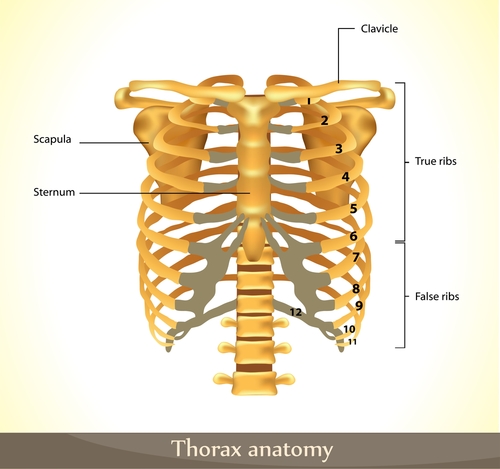
A variety of terms have been used to describe this syndrome such as costochondritis, costosternal syndrome, anterior chest wall syndrome, Tietze’s syndrome (costochondritis with swelling at the painful area). The diagnosis is based upon the ability to reproduce pain by pushing on the involved cartilage on the rib cage. In the photo, the grey colored areas represent cartilage. It is caused by inflammation of the junctions where the upper ribs join with the cartilage that holds them to the breastbone (sternum). It is very common syndrome that is seen in the medical clinic and often follows some sort of activity or trauma. Many patients with a cough develop this as a result of the continued coughing and rapid expansion/contraction of the rib cage.
Symptoms: Pain and tenderness in the locations where your ribs attach to your breastbone (costosternal joints), often sharp pain, often worse when taking deep breaths, pain when coughing, and difficulty breathing.
Causes: We don’t know what exactly causes most cases of costochondritis, but some causes might be: Injury such as a blow to the chest, physical strain from lifting or stenuous exercise, upper respiratory illness (produces cough/sneezing), pain from other areas of your body can sometimes be misinterpreted by your brain, causing pain in places far away from where the problem occurs – this is called referred pain.
Treatment: Heat or ice may be helpful in relieving symptoms. Medications can also be used to reduce the inflammation – ibuprofen or naproxen are commonly used for this. Avoid unnecessary exercise or activities such as contact sports until there is improvement in your symptoms.
I hope that you have found this information useful. Wishing you the best of health,
This is for informational use only and should not be used to substitute for seeing a medical provider to determine the cause of your pain.
Sometimes patients come into the clinic with complaints of pain in the chest and are worried about their heart. It can be confusing because the pain can occur in the same general area as pain that we think of when we say cardiac chest pain, but the history and physical exam is different.
A variety of terms have been used to describe this syndrome such as costochondritis, costosternal syndrome, anterior chest wall syndrome, Tietze’s syndrome (costochondritis with swelling at the painful area). The diagnosis is based upon the ability to reproduce pain by pushing on the involved cartilage on the rib cage. In the photo, the grey colored areas represent cartilage. It is caused by inflammation of the junctions where the upper ribs join with the cartilage that holds them to the breastbone (sternum). It is very common syndrome that is seen in the medical clinic and often follows some sort of activity or trauma. Many patients with a cough develop this as a result of the continued coughing and rapid expansion/contraction of the rib cage.
Symptoms: Pain and tenderness in the locations where your ribs attach to your breastbone (costosternal joints), often sharp pain, often worse when taking deep breaths, pain when coughing, and difficulty breathing.
Causes: We don’t know what exactly causes most cases of costochondritis, but some causes might be: Injury such as a blow to the chest, physical strain from lifting or stenuous exercise, upper respiratory illness (produces cough/sneezing), pain from other areas of your body can sometimes be misinterpreted by your brain, causing pain in places far away from where the problem occurs – this is called referred pain.
Treatment: Heat or ice may be helpful in relieving symptoms. Medications can also be used to reduce the inflammation – ibuprofen or naproxen are commonly used for this. Avoid unnecessary exercise or activities such as contact sports until there is improvement in your symptoms.
I hope that you have found this information useful. Wishing you the best of health,
Scott Rennie, D.O.
Board Certified in Obesity Medicine and Family Medicine
This blog is for educational purposes only and does not constitute individual medical advice. Always consult your own physician before making changes to your health, medications, or treatment plan.
 Doctor Rennie's Blog