How Processed Food Disrupts the Gut Brain Connection

For years we told patients obesity came down to calories in and calories out. The research has moved. The gut-brain axis, the two-way traffic between the digestive system and the central nervous system, sits at the center of hunger, satiety, and reward. When it works, it regulates intake without conscious effort. Against the current food supply, it often doesn’t work.

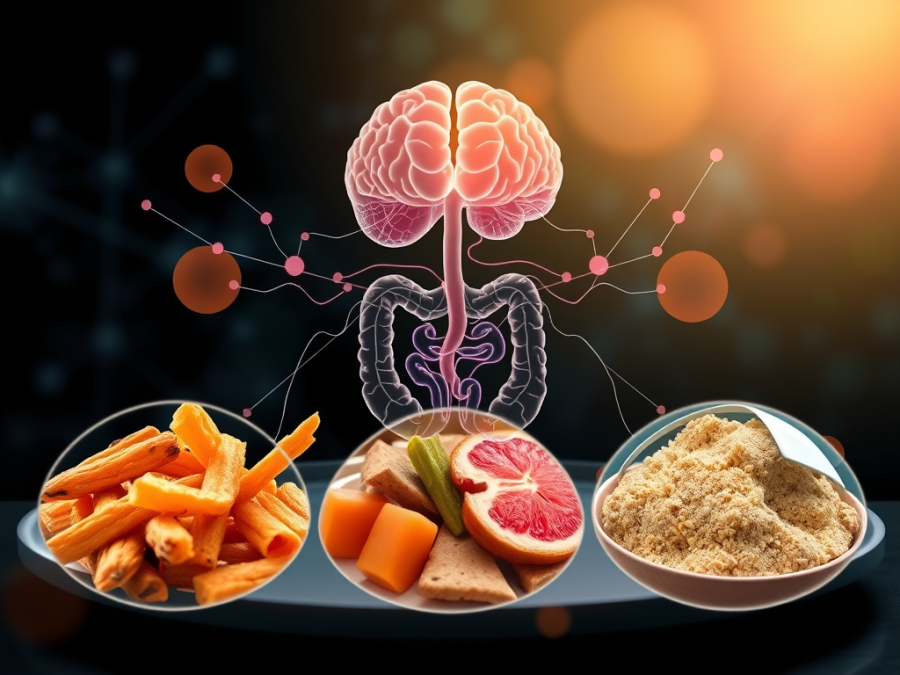
The axis runs on neural, hormonal, and metabolic signals. After a meal, the gut reports what came in, how much, and when to stop. That system evolved for whole foods and scarce calories. It was never built for a diet dominated by processed, energy-dense products.

Alexandra DiFeliceantonio and Dana Small have argued that modern food disrupts the system by creating mismatches between what the gut senses and how the brain responds (Small & DiFeliceantonio, Science, 2019). Three features stand out.

The first is macronutrient combination. Fat and refined carbohydrate rarely appear together in high amounts in nature. Most processed food delivers both. People assign higher value to fat-carb combinations even when calories are held constant. In one controlled experiment, participants bid more money for foods containing both than for foods containing either alone (DiFeliceantonio et al., Cell Metab, 2018).

Speed of absorption is the second. Highly processed foods deliver calories fast, producing stronger responses in glucose metabolism and reward pathways (Carmody et al., PNAS, 2011; Hall et al., Cell Metab, 2019). Rodents develop stronger preferences for rapidly metabolized foods. In humans, faster eating rate tracks with weight gain.

Additives are the third. Sweeteners, emulsifiers, and artificial flavors make food more palatable while confusing the signaling underneath. When sweet taste stops reliably predicting calorie content, the brain loses the ability to regulate intake based on prior experience (Dalenberg et al., Cell Metab, 2020). The body learns that taste no longer matches nutrition.

The evidence supports the picture. People with obesity show altered valuation of high-reward foods compared with lean individuals (Perszyk et al., Nutrients, 2021). Rodents fed cafeteria-style diets full of energy-dense processed food overeat and gain weight, while chow-fed controls hold steady (Johnson & Kenny, Nat Neurosci, 2008; Beilharz et al., Front Psychol, 2014). Neuroimaging shows the striatum responding differently to fat-carb combinations than to single macronutrients (DiFeliceantonio et al., 2018).

All of which points at something uncomfortable. The modern food environment may overwhelm and distort the very systems built to keep intake in check. That is a real explanation for why “eat less, move more” fails so often. The advice assumes intact gut-brain signaling in people whose signaling is already compromised.

The open research question is how to restore it. Diets built around foods that reinforce reliable gut-brain communication. Studies of how additives affect hormonal and neural markers of satiety. Behavioral work helping patients relearn hunger and fullness cues.

Clinically, the thing worth holding onto is the environment patients are choosing inside. A food supply engineered to exploit biological vulnerabilities will beat most people’s intentions, and restoring the fidelity of that signaling may be where the real leverage sits.

Scott Rennie, D.O.

References:

1. Small DM, DiFeliceantonio AG. Processed foods and food reward. Science. 2019;363(6425):346-347. https://pubmed.ncbi.nlm.nih.gov/30679360/

2. DiFeliceantonio AG, et al. Supra-Additive Effects of Combining Fat and Carbohydrate on Food Reward. Cell Metab. 2018;28(1):33-44.e3. https://pubmed.ncbi.nlm.nih.gov/29909968/

3. Carmody RN, Weintraub GS, Wrangham RW. Energetic consequences of thermal and nonthermal food processing. Proc Natl Acad Sci USA. 2011;108(48):19199-19203. https://pubmed.ncbi.nlm.nih.gov/22065771/

4. Hall KD, et al. Ultra-Processed Diets Cause Excess Calorie Intake and Weight Gain. Cell Metab. 2019;30(1):67-77.e3. https://pubmed.ncbi.nlm.nih.gov/31105044/

5. Dalenberg JR, et al. Short-Term Consumption of Sucralose with, but not without, Carbohydrate Impairs Neural and Metabolic Sensitivity to Sugar in Humans. Cell Metab. 2020;31(3):493-502.e7. https://pubmed.ncbi.nlm.nih.gov/32130879/

6. Perszyk EE, et al. Nutrients. 2021;13(11):3846.

7. Johnson PM, Kenny PJ. Dopamine D2 receptors in addiction-like reward dysfunction and compulsive eating in obese rats. Nat Neurosci. 2010;13(5):635-641. https://pubmed.ncbi.nlm.nih.gov/20348917/

8. Beilharz JE, Maniam J, Morris MJ. Front Psychol. 2014;5:1454.

Board Certified in Obesity Medicine and Family Medicine

This blog is for educational purposes only and does not constitute individual medical advice. Always consult your own physician before making changes to your health, medications, or treatment plan.

How Parents Influence a Child’s Weight and Eating

Childhood obesity has little to do with a child’s willpower. Biology, environment, and daily routine shape it. Genetics matter. So does the household, and that is where parents hold real leverage: how they feed, how they structure the day, what they model.

None of what follows is about blame. It is about where the leverage actually sits.

The clearest example starts in infancy. Responsive feeding means reading hunger and fullness cues instead of pressuring or ignoring them, and it has been linked to healthier eating patterns and weight gain matched to a child’s needs (Ventura, Adv Nutr, 2017). A parent who notices a baby turning away from the bottle and respects that signal is teaching self-regulation. The “clean your plate” approach many of us grew up with does the opposite. It overrides the signal and sets up overeating later (Johnson & Birch, Pediatrics, 1994).

Breastfeeding is where the popular version of this claim outruns the evidence. Observational studies associate exclusive and longer breastfeeding with lower obesity risk, with reductions sometimes quoted around 24%. The review most often cited for that number argues the observational literature is heavily confounded by socioeconomic status, maternal weight, and the feeding practices that travel alongside breastfeeding, and that randomized and sibling-comparison designs show a far weaker effect (Woo & Martin, Curr Obes Rep, 2015). Breastfeeding is worth supporting on its own merits. Promising parents it will prevent obesity goes past what the data support.

Parents also teach by example. A child who regularly sees a parent eating vegetables or trying something unfamiliar is more likely to do it. Repeated exposure paired with parental modeling makes children more willing to accept foods they would otherwise refuse. Using food as a reward runs the other way. Saying “you can have dessert if you eat your broccoli” teaches a child that sweets are the prize and broccoli is the toll (Newman & Taylor, J Exp Child Psychol, 1992).

The home environment does quiet work. Fruit and vegetables visible and easy to grab, energy-dense snacks harder to reach, and children drift toward the better option without a rule being enforced. Family meals matter too. The link to diet quality is consistent even where the direct effect on weight is murkier. They add structure and cut down on distracted eating.

Sleep and activity belong in the same conversation. Short sleep and heavy screen time in early childhood both raise obesity risk. Parents who hold bedtimes, encourage active play, and set limits on screens are shaping energy balance in ordinary daily ways.

Some strategies backfire. Restriction is the main one. In a well-known experiment, restricting children’s access to a particular snack increased both their desire for it and how much they ate when it became available, compared with an unrestricted food (Fisher & Birch, Appetite, 1999). Using food to soothe emotion has a similar problem. It builds an association between eating and comfort that persists into adult life.

Genetics play their part. Some children are more sensitive to food cues and less attuned to satiety, and twin studies put real numbers on that heritability (Wardle, Carnell & Plomin, Am J Clin Nutr, 2008). Even so, a supportive home makes a measurable difference in children carrying that predisposition. Responsive feeding, structure, and consistent modeling buffer inherited risk.

For families already struggling, family-based behavioral treatment has trial evidence behind it. The model runs on collaborative goal-setting, structured monitoring, and positive reinforcement, and it improves child weight outcomes in ways that hold up over time (Wilfley et al., JAMA Pediatr, 2017). Parent-only versions of the same treatment perform comparably to parent-and-child versions, which matters for families who can’t get everyone to an appointment (Boutelle et al., Appetite, 2021).

Parents don’t cause obesity. They do hold leverage points that matter, from infancy through adolescence, in how food, sleep, stress, and activity get managed at home.

Scott Rennie, D.O.

References:

1. Ventura AK. Does Breastfeeding Shape Food Preferences? Links to Obesity. Adv Nutr. 2017;8(1):149-150.

2. Johnson SL, Birch LL. Parents’ and children’s adiposity and eating style. Pediatrics. 1994;94(5):653-661. https://pubmed.ncbi.nlm.nih.gov/7936891/

3. Woo JG, Martin LJ. Does Breastfeeding Protect Against Childhood Obesity? Moving Beyond Observational Evidence. Curr Obes Rep. 2015;4(2):207-216. https://pubmed.ncbi.nlm.nih.gov/26100032/

4. Newman J, Taylor A. Effect of a means-end contingency on young children’s food preferences. J Exp Child Psychol. 1992;53(2):200-216. https://pubmed.ncbi.nlm.nih.gov/1578198/

5. Fisher JO, Birch LL. Restricting access to foods and children’s eating. Appetite. 1999;32(3):405-419. https://pubmed.ncbi.nlm.nih.gov/10336797/

6. Wardle J, Carnell S, Haworth CM, Plomin R. Evidence for a strong genetic influence on childhood adiposity despite the force of the obesogenic environment. Am J Clin Nutr. 2008;87(2):398-404. https://pubmed.ncbi.nlm.nih.gov/18258631/

7. Wilfley DE, et al. Dose, Content, and Mediators of Family-Based Treatment for Childhood Obesity. JAMA Pediatr. 2017;171(12):1151-1159. https://pubmed.ncbi.nlm.nih.gov/29084318/

8. Boutelle KN, et al. Appetite. 2021.

Board Certified in Obesity Medicine and Family Medicine

This blog is for educational purposes only and does not constitute individual medical advice. Always consult your own physician before making changes to your health, medications, or treatment plan.