

Unlabeled blister pack of six white oval antibiotic tablets beside a plain paper pharmacy bag on a kitchen table

I hear it almost every day now. “I think I just need a Z-Pak.”

Sometimes it’s phrased as a question. Sometimes it isn’t. In telemedicine especially, many patients request azithromycin by name within the first minute of the visit. The symptoms are familiar. Runny nose. Congestion. Post-nasal drip. Scratchy throat. Maybe a cough that started yesterday. No fever. No shortness of breath. No focal findings anyone could reasonably point to as bacterial.

But they’re convinced the Z-Pak will help them get better faster. They’ve taken it before. It worked last time. Or at least they felt better a few days later and connected the dots.

This didn’t happen by accident.

Azithromycin earned its place in outpatient medicine because it was easier to tolerate than older antibiotics like erythromycin, had fewer drug interactions than clarithromycin, and came packaged in a way that felt efficient. Six pills. Five days. Done. The Z-Pak became a symbol of modern medicine that didn’t slow you down.

Over time, it also became the antibiotic people expected.

In telemedicine, that expectation is even stronger. There’s no exam table. No stethoscope. No labs. No chest X-ray down the hall. The visit is brief by design. When a patient feels sick and wants something tangible, the Z-Pak becomes the path of least resistance. Prescribing it can shorten the encounter. It avoids a long explanation. It reduces the risk of a bad review. It keeps patient satisfaction scores high. It keeps supervisors and clinic managers happy. Everyone moves on to the next visit.

I understand why this happens. I’ve seen it from the inside.

But convenience doesn’t make a treatment safe or appropriate.

Azithromycin does not treat viral infections. It does not help the common cold. It does not clear post-nasal drip. It does not shorten the course of uncomplicated upper respiratory infections. When patients feel better after taking it, they almost always would have improved anyway.

What it does do is expose people to real risk.

Azithromycin can prolong the QT interval. That matters. QT prolongation can predispose patients to dangerous heart rhythms, including torsades de pointes and sudden cardiac death. This risk is higher in people with underlying heart disease, electrolyte abnormalities, or those taking other QT-prolonging medications, but it is not zero in otherwise healthy adults. Large observational studies have shown an increased risk of cardiovascular death during azithromycin treatment compared with other antibiotics or no antibiotics at all.

That risk is invisible to patients. They don’t feel their QT interval getting longer. They just know they want something to help them feel better.

Antibiotics also carry more familiar side effects. Nausea. Diarrhea. Abdominal cramping. Yeast infections. Rashes. Allergic reactions. These are not rare, and they are not trivial when the medication wasn’t needed in the first place.

Then there’s resistance. Every unnecessary antibiotic course applies selective pressure. Azithromycin resistance is already a growing problem in common respiratory pathogens. When we reach for it reflexively, we make it less useful for the patients who actually need it.

The harder part of these visits is the explaining.

It takes longer to walk someone through why their symptoms are viral. Why time, fluids, nasal saline, antihistamines, or intranasal steroids actually help. Why rest matters. Why antibiotics won’t fix inflammation or mucus production. Why feeling miserable does not automatically mean something dangerous is happening.

It’s much faster to send a prescription.

But faster is not better medicine.

I get patients asking for Z-Paks every day that I work in telemedicine. It’s so common that it happens at least once a day, if not three or four times a day. One example sticks with me. A patient requested a Z-Pak for congestion and sinus pressure that had been present for two days. No fever. No facial pain. No worsening course. When I explained why antibiotics wouldn’t help, they were frustrated at first. We talked through what sinus infections actually look like and when antibiotics are appropriate. We discussed symptom control instead. Two days later, they messaged to say they felt better and were glad they didn’t take an antibiotic they didn’t need.

That outcome required time. It required education. It required saying no.

Not every visit goes that smoothly. Some patients remain disappointed. Some leave poor reviews. That pressure is real, especially in high-volume telemedicine environments.

But prescribing antibiotics to keep the peace comes at a cost. It shifts risk onto the patient. It shifts harm into the future. And it reinforces the idea that medicine should always offer a pill, even when the best treatment is patience and support.

Azithromycin became dominant because it was easy. That same ease is why we need to be more careful with it now.

Scott Rennie, D.O.

Sources:

Ray WA, Murray KT, Hall K, Arbogast PG, Stein CM. Azithromycin and the risk of cardiovascular death. New England Journal of Medicine. 2012;366:1881-1890.

Sax PE. How the Z-Pak Took Over Outpatient Medicine. Substack lecture notes and essay.

Svanstrom H et al. Use of azithromycin and death from cardiovascular causes. New England Journal of Medicine. 2013;368:1704-1712.

FDA Drug Safety Communication. Azithromycin and risk of potentially fatal heart rhythms. US Food and Drug Administration. 2013.

CDC. Antibiotic use in the United States: Progress and opportunities. Centers for Disease Control and Prevention.

Board Certified in Obesity Medicine and Family Medicine

This blog is for educational purposes only and does not constitute individual medical advice. Always consult your own physician before making changes to your health, medications, or treatment plan.
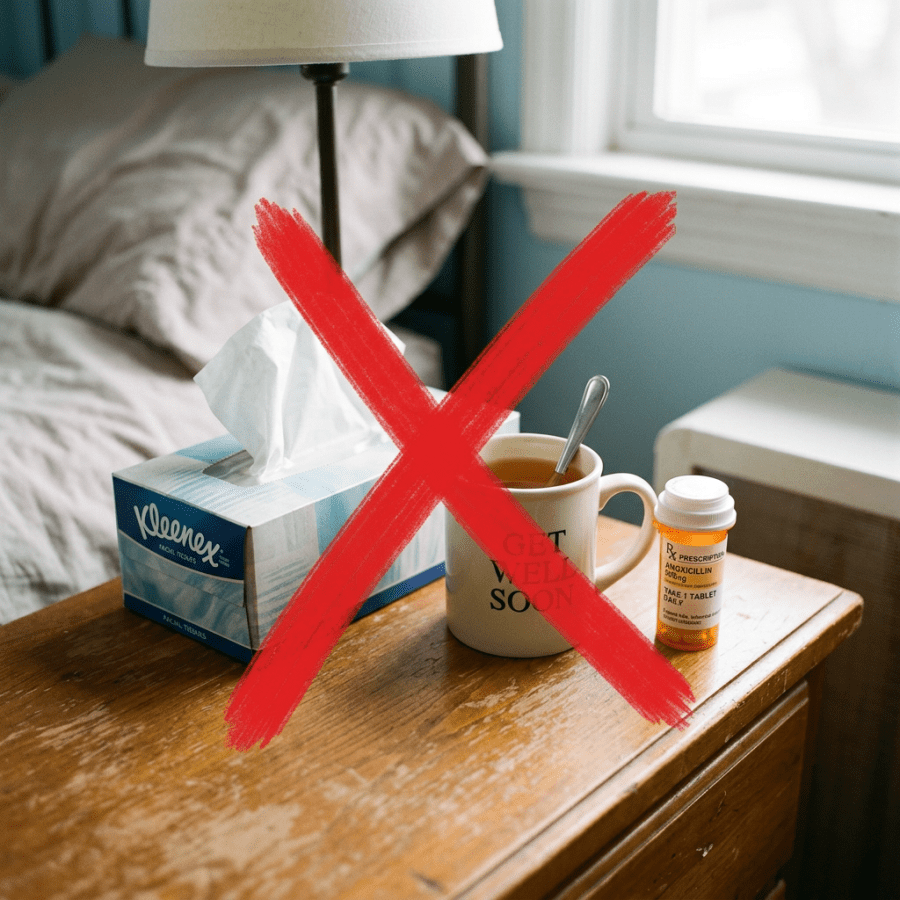
Tissues, a tea cup with spoon, and a medication bottle on a wooden bedside table crossed out with a red X

Why Antibiotics Don’t Work for Colds, Flu, or Viruses

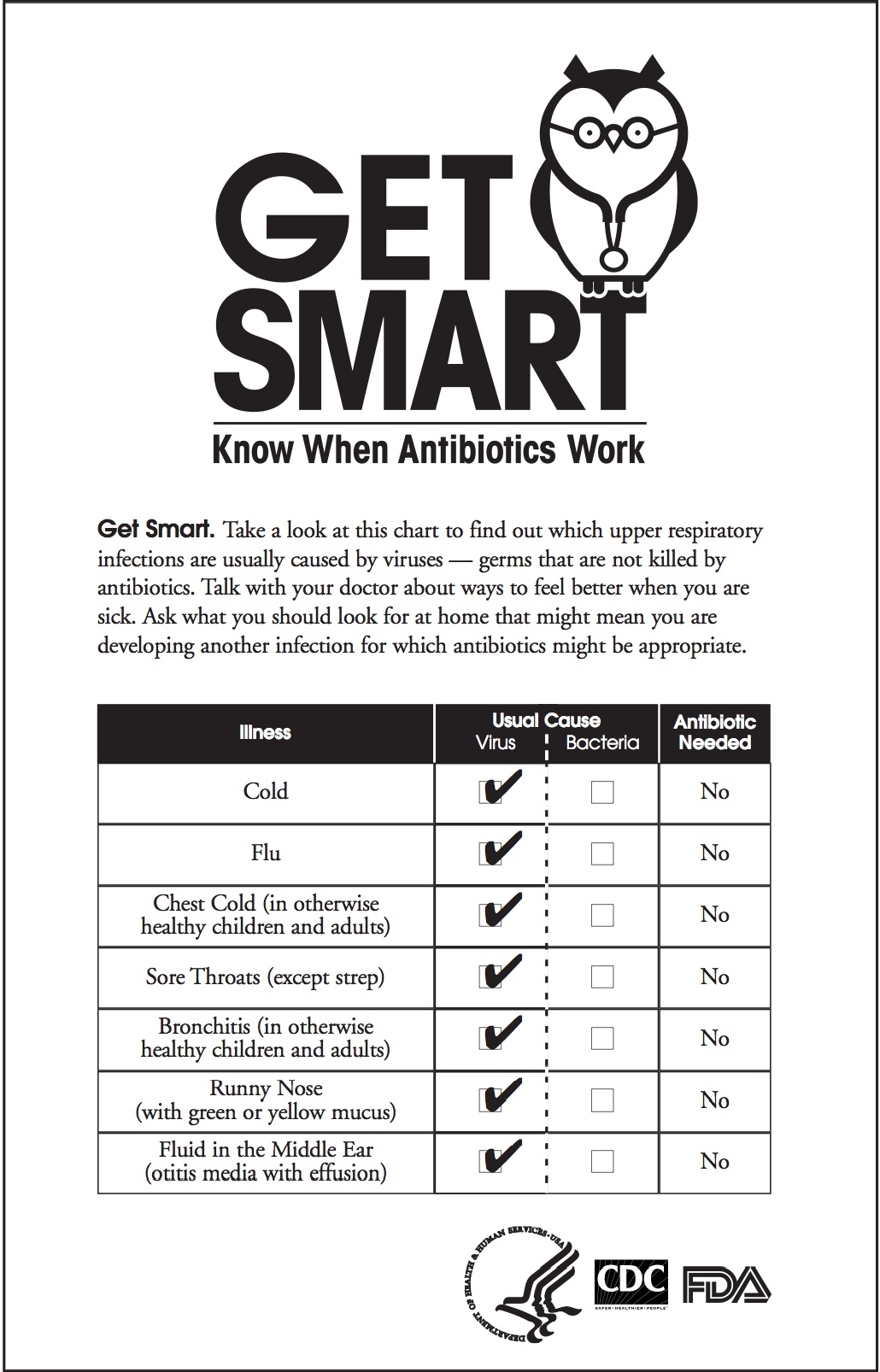
I have many patients who come into the clinic with a common cold and request antibiotics.  Antibiotics can be harmful to your body in many ways.  I think this is very important information from the CDC: Are you aware that colds, flu, most sore throats, and bronchitis are caused by viruses? Did you know that antibiotics do not help fight viruses? It’s true. Plus, taking antibiotics when you have a virus may do more harm than good. Taking antibiotics when they are not needed increases your risk of getting an infection later that resists antibiotic treatment.  In addition, antibiotics can cause bloody diarrhea and abdominal pain that can last for weeks, severe life threatening allergic reactions (anaphylaxis) and rashes(hives).  Antibiotics can also damage some internal organs such as the liver or kidneys.   Improper antibiotic causes prolonged healing time and increased medical costs.
  • Antibiotics cure bacterial infections, not viral infections such as:
    • Colds or flu;
    • Most coughs and bronchitis;
    • Sore throats not caused by strep; or
    • Runny noses.
  • Taking antibiotics for viral infections, such as a cold, cough, the flu, or most bronchitis, will not:
    • Cure the infections;
    • Keep other individuals from catching the illness; or
    • Help you feel better.
When you use antibiotics appropriately, you do the best for your health, your family’s health, and the health of those around you. “We want Americans to keep their families and communities healthy by getting smart about the proper use of antibiotics,” said Lauri Hicks, D.O., medical director of CDC’s Get Smart campaign.

What To Do

  • Talk with your healthcare provider about antibiotic resistance.
  • When you are prescribed an antibiotic,
    • Take it exactly as the doctor tells you. Complete the prescribed course even if you are feeling better. If treatment stops too soon, some bacteria may survive and re-infect you.This goes for children, too. Make sure your children take all medication as prescribed, even if they feel better.Throw away any leftover medication once you have completed your prescription

What Not To Do

  • Antibiotics cure bacteria, not viruses such as:
    • Colds or flu;
    • Most coughs and bronchitis;
    • Sore throats not caused by strep; or
    • Runny noses.

Scott Rennie, D.O.
Board Certified in Obesity Medicine and Family Medicine

This blog is for educational purposes only and does not constitute individual medical advice. Always consult your own physician before making changes to your health, medications, or treatment plan.
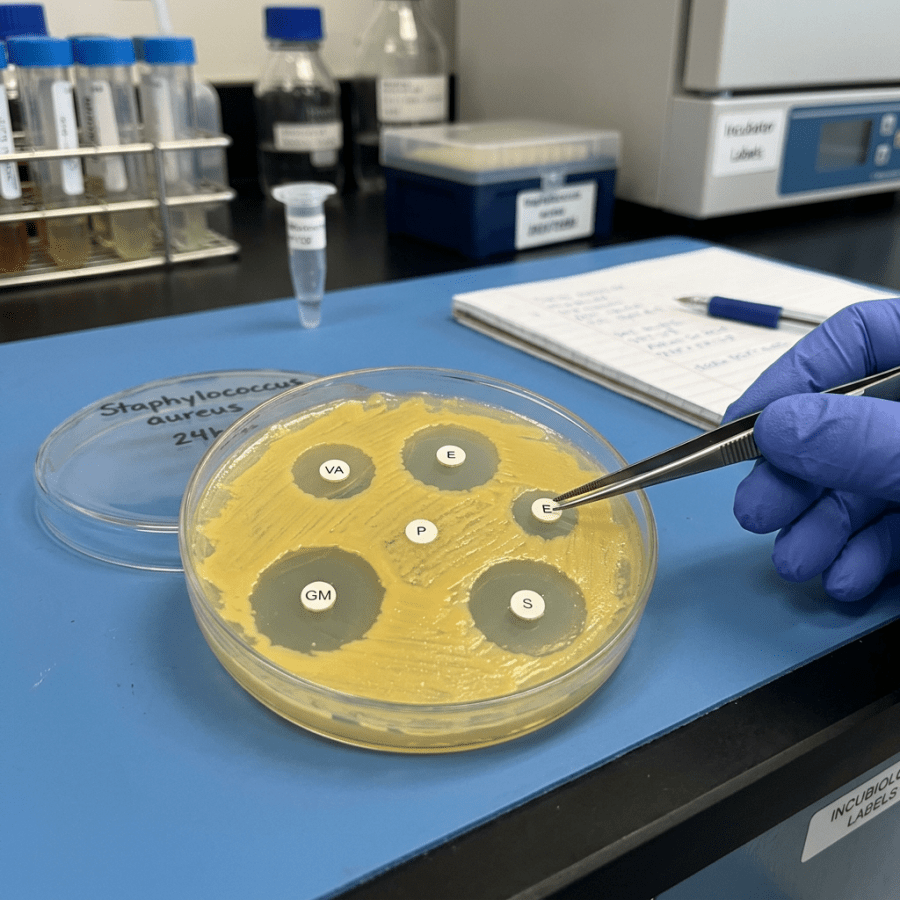
Staphylococcus aureus culture plate with antibiotic discs and inhibition zones

Antibiotic Resistance Could End Modern Medicine, WHO Warns

The world is entering an antibiotic crisis which could make routine operations impossible and a scratched knee potentially fatal, the head of the World Health Organisation has claimed.

shutterstock_120021052
Bacteria carried by humans are becoming increasingly resistant to antibiotics Photo: JOHN TAYLOR
By Hannah Furness From:  The Telegraph
7:00AM GMT 16 Mar 2012
Margaret Chan, director general of the WHO, warned that bacteria were starting to become so resistant to common antibiotics that it could bring about “the end of modern medicine as we know it.”
As a result, she claimed, every antibiotic ever developed is at risk of becoming useless, making once-routine operations impossible.
This would include many of the breakthrough drugs developed to treat tuberculosis, malaria, bacterial infections and HIV/AIDS, as well as simple treatments for cuts.
Speaking to a conference of infectious disease experts in Copenhagen, Dr Chan said we could be entering into a “post-antibiotic era”. Replacement medicines could become more expensive, with longer periods of treatment required to bring about the same effect, she added. Dr Chan said: “Things as common as strep throat or a child’s scratched knee could once again kill. “Antimicrobial resistance is on the rise in Europe and elsewhere in the world. We are losing our first-line antimicrobials. “Replacement treatments are more costly, more toxic, need much longer durations of treatment, and may require treatment in intensive care units. “For patients infected with some drug-resistant pathogens, mortality has been shown to increase by around 50 per cent. “A post-antibiotic era means, in effect, an end to modern medicine as we know it.” The stark warning comes shortly after the World Health Organisation published a new book warning of the “global crisis”, entitled “The evolving threat of antimicrobial resistance.” It reads: “Bacteria which cause disease react to the antibiotics used as treatment by becoming resistant to them, sooner or later. “A crisis has been building up over the decades, so that today many common and life-threatening infections are becoming difficult or even impossible to treat, sometimes turning a common infection into a life-threatening one.” The paper blamed the current situation largely on the misuse of antibiotics, which are not prescribed properly and used too frequently and for too long. It added that an “inexorable increase in antimicrobial-resistant infections, a dearth of new antibiotics in the pipeline and little incentive for industry to invest in research and development” had led to a need for innovation”. The WHO has now appealed to governments across the world to support research into the antimicrobial resistance.

Scott Rennie, D.O.
Board Certified in Obesity Medicine and Family Medicine

This blog is for educational purposes only and does not constitute individual medical advice. Always consult your own physician before making changes to your health, medications, or treatment plan.