
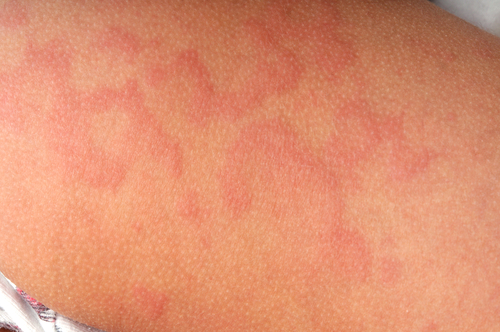
 Photo credit: http://drhuiallergist.com/allergy/urticaria-and-angioedema/
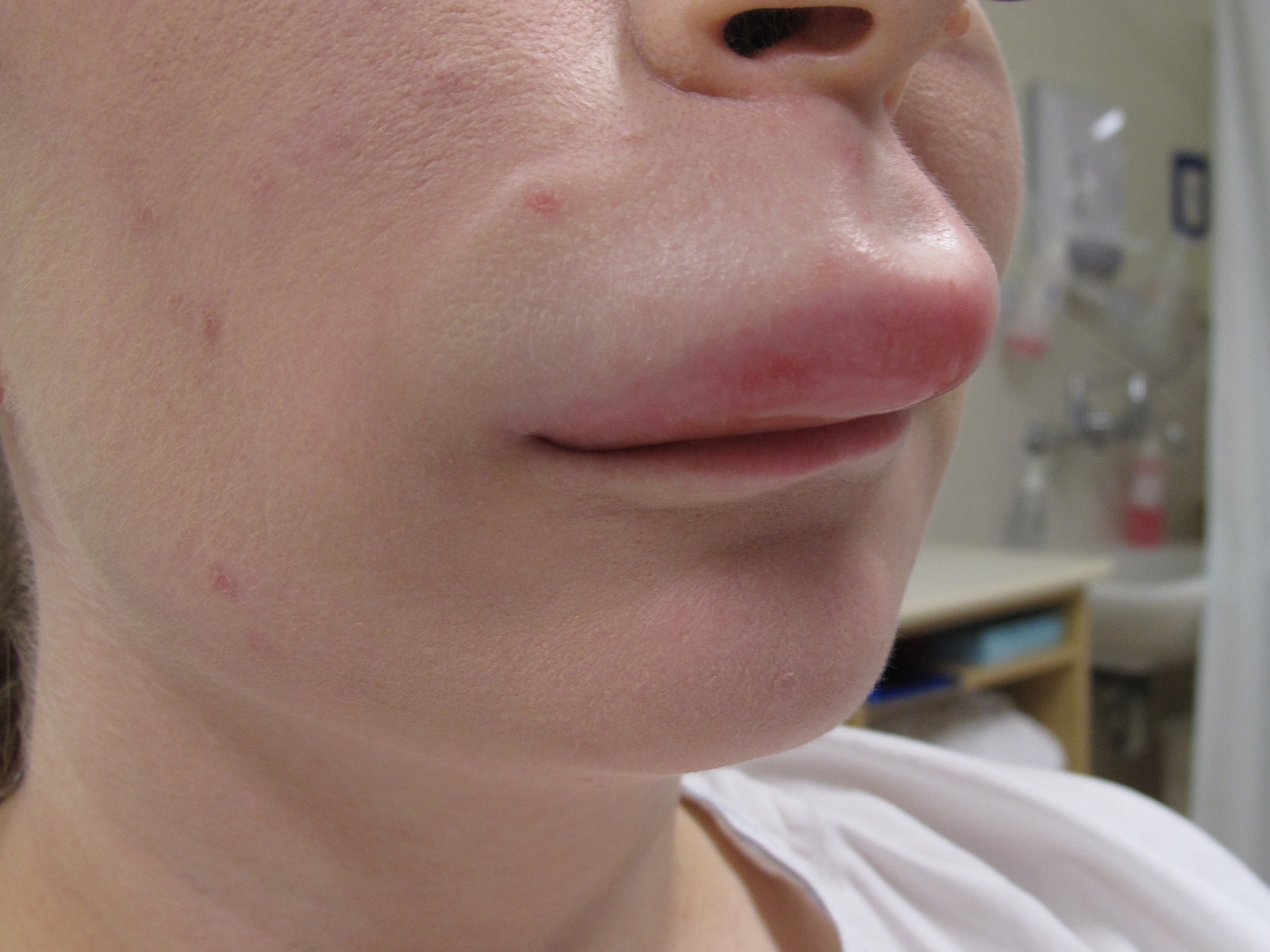
Some patients come to the urgent care with swelling or puffiness under the skin, usually in the face, eyelids, ears, mouth, tongue, hands, feet or genital area. The most common place that we see this is on the upper lip but it can occur in many areas on the body. We call this condition angioedema.
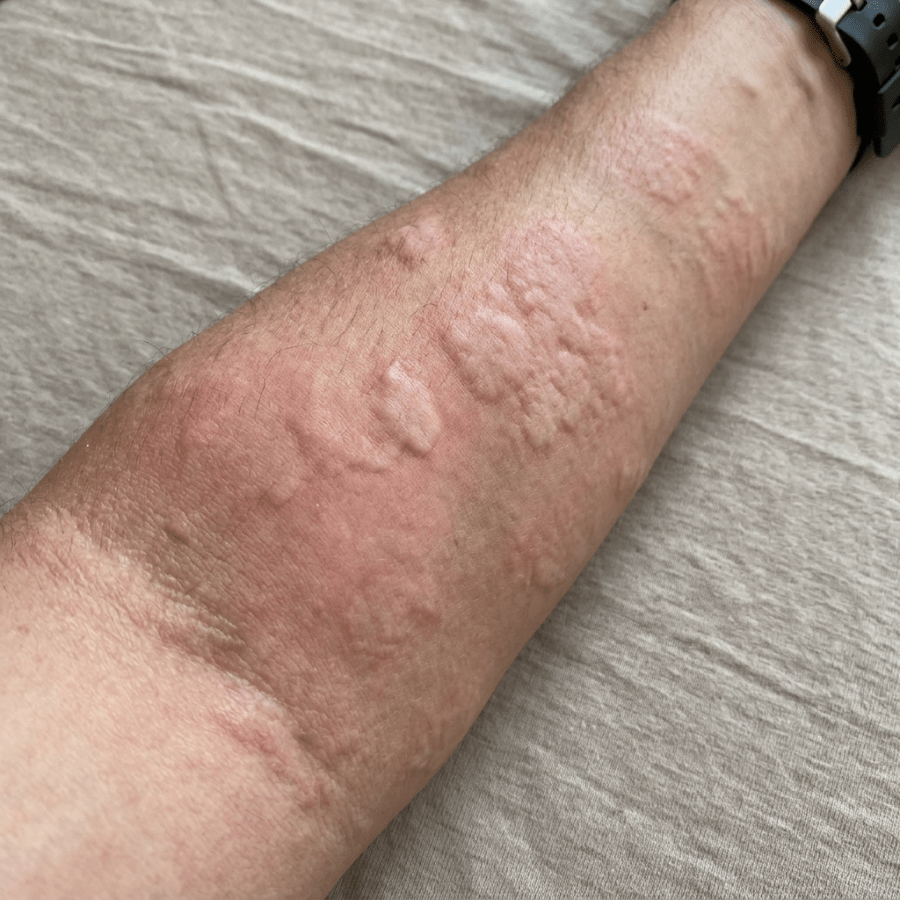
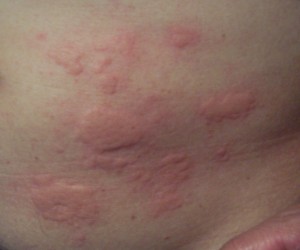
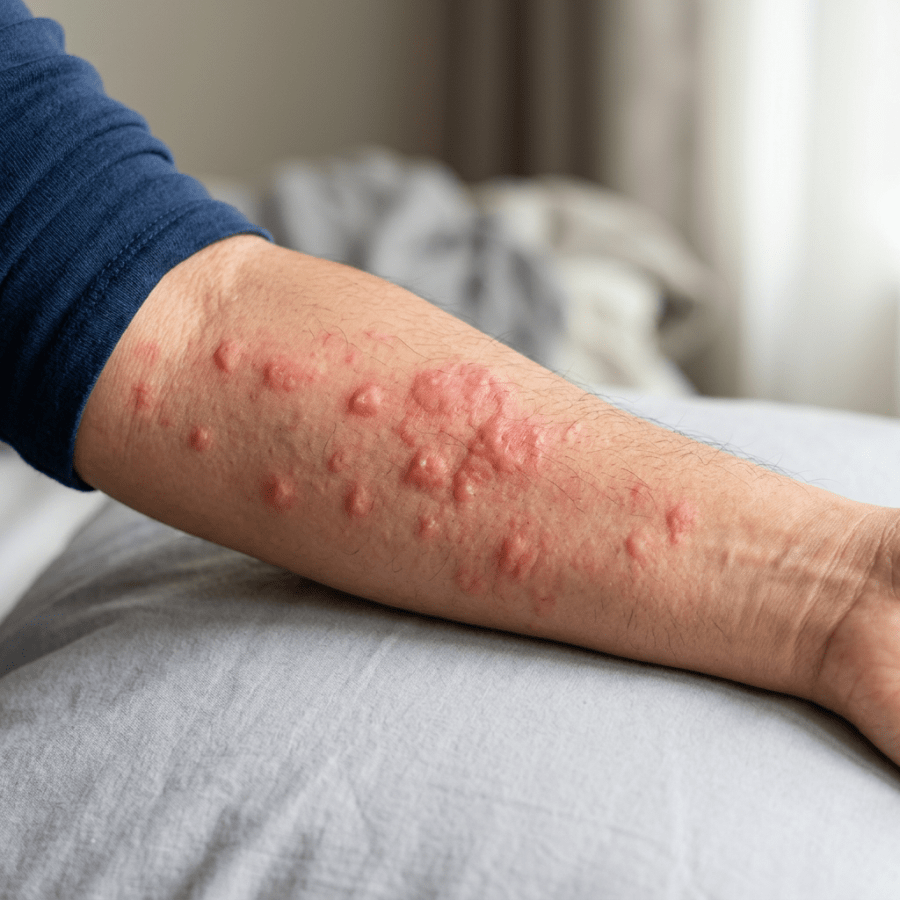
Hives are another common problem that sometimes occur with angioedema. They are red, raised patches of skin that are generally very itchy. Urticaria is the medical term for hives. They are raised areas of skin that itch intensively and are red with a pale center. About 20% of people get hives at some time during their lives. When someone comes into contact with a substance that they are allergic to, the body releases histamine from mast cells. In most cases, hives appear and the disappear within several areas, and so the rash may look like it migrates or spreads around the body. Sometimes the red raised areas get bigger or merge together and form larger hives. Hives are generally not painful and do not have blood-blister type areas in them. Hives usually do not appear with fever and joint pain.
Causes of Hives: There are several possible and may include:
1) Infections – viral infections that cause the common cold are the cause of hives in 80% of children
2) Medications
3) Painkillers such as codeine or morphine
4) IV contrast dye
5) Insect stings
6) Food allergies – typically occur with 30 minutes of eating the food. Typical foods that cause hives include milk, eggs, peanuts or other nuts, soy, wheat, fish or shellfish.
7) Physical contact – After touching a certain substance such as animals, certain plants, raw fruits/vegetables or latex (found in balloons, latex gloves and condoms)
Causes of Angioedema: In people who get angioedema for the first time, it might be because of a new allergy. Allergies are common to several of the following and can cause angioedema or hives:
1) Medicines such as antibiotics or aspirin
2) Foods such as eggs, fish, nuts or shellfish
3) Insect stings
4) Exercise can cause angioedema or hives
5) Environmental substance such as a plant, animal, laundry detergent, soap, perfume latex, etc.
6) Many times we are unsure of what caused the angioedema or hives to occur
7) Certain blood pressure medications called “ACE Inhibitors” such as lisinopril, enalapril, captopril (and many others) can cause angioedema
8) Ibuprofen/Advil or Aleve
Treatment: Minimizing exposure to the allergic agent is the first step. Depending on the severity of symptoms, your medical provider may provide treatment including antihistamines such as Benadryl, Prednisone or other steroid medications (either pills or shots) .
Prevention: Avoiding foods, medicines or exposure to insects that you have allergies to can decrease your chances of developing angioedema or hives. Some people take antihistamines every day to help prevent getting angioedema if they get it frequently.
When to seek medical care: Make sure you are evaluated by a medical provider right away if you have any of the following:
1) Trouble breathing
2) Tightness in the throat
3) Nausea/vomiting
4) Abdominal pain/cramping
5) Passing out or fainting
I hope that you have found this information useful. Wishing you the best of health,
Photo credit: http://drhuiallergist.com/allergy/urticaria-and-angioedema/
Some patients come to the urgent care with swelling or puffiness under the skin, usually in the face, eyelids, ears, mouth, tongue, hands, feet or genital area. The most common place that we see this is on the upper lip but it can occur in many areas on the body. We call this condition angioedema.
Hives are another common problem that sometimes occur with angioedema. They are red, raised patches of skin that are generally very itchy. Urticaria is the medical term for hives. They are raised areas of skin that itch intensively and are red with a pale center. About 20% of people get hives at some time during their lives. When someone comes into contact with a substance that they are allergic to, the body releases histamine from mast cells. In most cases, hives appear and the disappear within several areas, and so the rash may look like it migrates or spreads around the body. Sometimes the red raised areas get bigger or merge together and form larger hives. Hives are generally not painful and do not have blood-blister type areas in them. Hives usually do not appear with fever and joint pain.
Causes of Hives: There are several possible and may include:
1) Infections – viral infections that cause the common cold are the cause of hives in 80% of children
2) Medications
3) Painkillers such as codeine or morphine
4) IV contrast dye
5) Insect stings
6) Food allergies – typically occur with 30 minutes of eating the food. Typical foods that cause hives include milk, eggs, peanuts or other nuts, soy, wheat, fish or shellfish.
7) Physical contact – After touching a certain substance such as animals, certain plants, raw fruits/vegetables or latex (found in balloons, latex gloves and condoms)
Causes of Angioedema: In people who get angioedema for the first time, it might be because of a new allergy. Allergies are common to several of the following and can cause angioedema or hives:
1) Medicines such as antibiotics or aspirin
2) Foods such as eggs, fish, nuts or shellfish
3) Insect stings
4) Exercise can cause angioedema or hives
5) Environmental substance such as a plant, animal, laundry detergent, soap, perfume latex, etc.
6) Many times we are unsure of what caused the angioedema or hives to occur
7) Certain blood pressure medications called “ACE Inhibitors” such as lisinopril, enalapril, captopril (and many others) can cause angioedema
8) Ibuprofen/Advil or Aleve
Treatment: Minimizing exposure to the allergic agent is the first step. Depending on the severity of symptoms, your medical provider may provide treatment including antihistamines such as Benadryl, Prednisone or other steroid medications (either pills or shots) .
Prevention: Avoiding foods, medicines or exposure to insects that you have allergies to can decrease your chances of developing angioedema or hives. Some people take antihistamines every day to help prevent getting angioedema if they get it frequently.
When to seek medical care: Make sure you are evaluated by a medical provider right away if you have any of the following:
1) Trouble breathing
2) Tightness in the throat
3) Nausea/vomiting
4) Abdominal pain/cramping
5) Passing out or fainting
I hope that you have found this information useful. Wishing you the best of health,
Scott Rennie, D.O.
Board Certified in Obesity Medicine and Family Medicine
This blog is for educational purposes only and does not constitute individual medical advice. Always consult your own physician before making changes to your health, medications, or treatment plan.
 Doctor Rennie's Blog