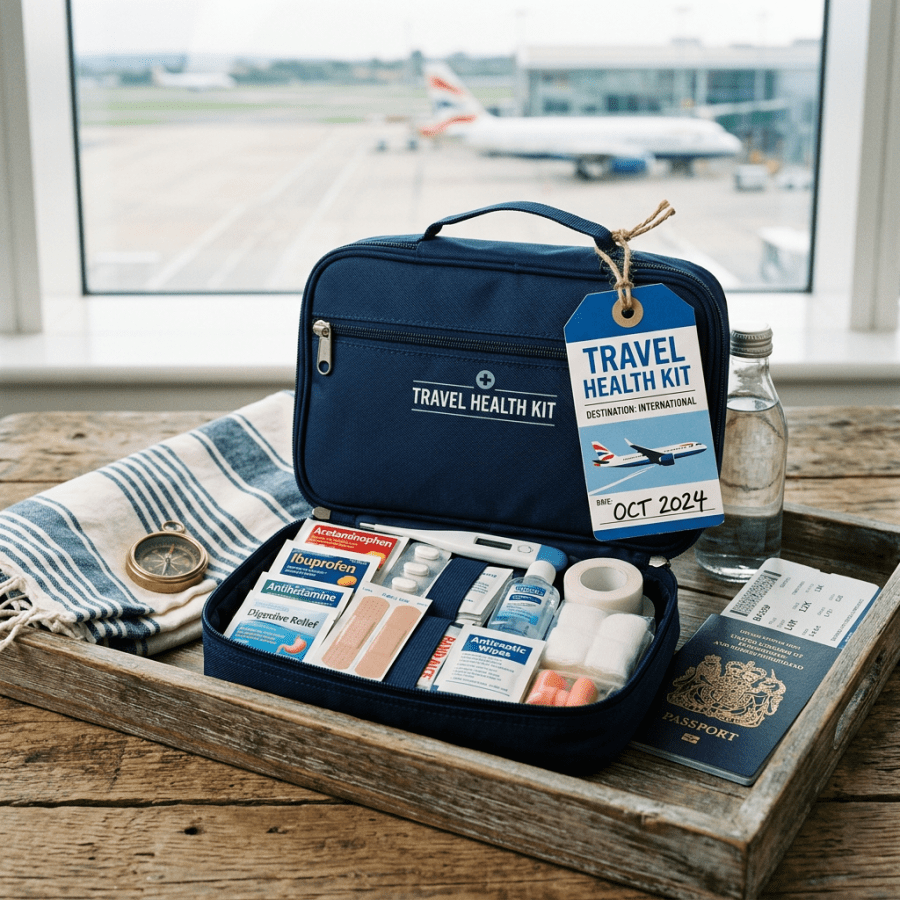
Travel health kit with airplane tag still life

Pack a Carry-On First Aid Kit for Air Travel and Flying

Now that most airlines charge for checked bags, it makes sense to think about carrying your first aid kit with you on the plane. The right kit depends a lot on where you’re headed. A weekend trip to the beach looks very different from a year in the Peace Corps. Still, there are some basics worth considering.

Headaches, stomach upset, and minor aches are common on the road. Medications like ibuprofen or acetaminophen can help with headaches or muscle pain. For heartburn or indigestion, travelers often bring something familiar such as famotidine or omeprazole. If you’re prone to motion sickness, an over-the-counter option like dimenhydrinate can prevent a miserable flight or bus ride.

Blisters are another frequent problem. A few squares of moleskin or blister pads can keep you walking instead of limping. Sunscreen and insect repellent are also essentials, especially if you’re outdoors a lot. I usually suggest packing an antihistamine like diphenhydramine. It works for allergies, bug bites, and sometimes helps with sleep if you’re stuck in a noisy hotel room.

Bring your daily prescription medications in your carry-on. Bags get lost, and it’s not worth the risk. Keep pills in the original bottles with your name and pharmacy label. If you’re traveling with controlled substances, a letter from your doctor on letterhead is a smart idea. Some countries restrict narcotics, even if you have a prescription, so check local regulations before you fly.

Simple supplies round out a kit. Adhesive bandages in a few sizes, medical tape, and a small tube of antibiotic ointment cover most cuts and scrapes. Anti-itch creams are handy for mosquito bites. Pack hand wipes or sanitizer with at least 60 percent alcohol for times when running water isn’t available. If you wear glasses or contacts, bring an extra pair.

Travel sometimes means unique risks. At high altitude, acetazolamide may be prescribed to prevent sickness. In malaria regions, prophylaxis may be recommended. Water purification tablets are also helpful in areas where drinking water isn’t reliable. And it’s smart to carry a contact card with your emergency numbers, your healthcare provider’s information, and the location of nearby hospitals or clinics. Many travelers also write down the local U.S. embassy contact information.

Insurance is another detail that people often overlook. Before you leave, call your insurance company to see if your policy applies overseas. In some cases, buying a short-term travel policy provides coverage and peace of mind.

I once spoke with a couple who traveled to rural South America with nothing more than sunscreen and bandages. After the first week, one developed severe diarrhea, and they had no loperamide or oral rehydration solution. They ended up driving two hours to find a clinic. They told me later that if they had packed a simple kit with a few basic medications, the whole ordeal might have been avoided.

Travel is unpredictable. Having a small kit in your carry-on won’t solve every problem, but it gives you control in those first uncomfortable hours before you can reach care.

This is for general information only and not intended as medical advice for an individual patient. If you have questions about what to bring on your trip, talk with your healthcare provider.

Wishing you the best of health,

Scott Rennie, D.O.
Board Certified in Obesity Medicine and Family Medicine

This blog is for educational purposes only and does not constitute individual medical advice. Always consult your own physician before making changes to your health, medications, or treatment plan.


Sources:
Build a First Aid Kit to Keep in Your Car for Travel

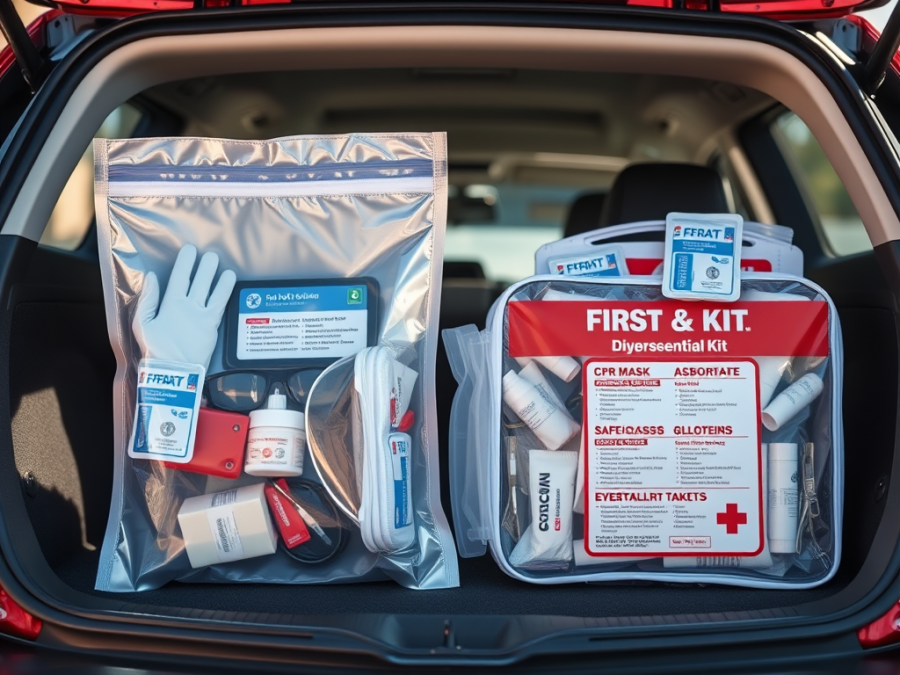
This is the second time I’ve revisited the idea of first aid kits for your car, and my view has shifted. At first, I thought having one small kit was enough. Now I think it’s better to keep two. I’ve found that having both a grab-and-go kit and a larger, more complete one is more practical, especially if you’re the first person to arrive at an accident.

The smaller kit is the one you carry quickly if you need to help right away. It doesn’t need to hold everything, just the essentials. A CPR mask, gloves, and some absorbent pads are a good start. Those pads don’t have to be fancy or sterile to be useful in an emergency. I’ve seen people improvise with feminine hygiene pads to stop bleeding. Add a pair of safety glasses to protect yourself and some glucose tablets in case someone with diabetes is crashing from low blood sugar. Keep it in something small like a mylar pouch so you can toss it in your hand and move fast.

The bigger kit is a different story. I think of it as a duplicate of a solid home first aid kit, but with extra gear for the road. When you’re traveling, you can’t always count on nearby supplies. I’ve noticed that once people put one together, they realize it’s far more complete than what most of their friends carry. That’s a good thing when you’re far from a store or waiting on emergency services.

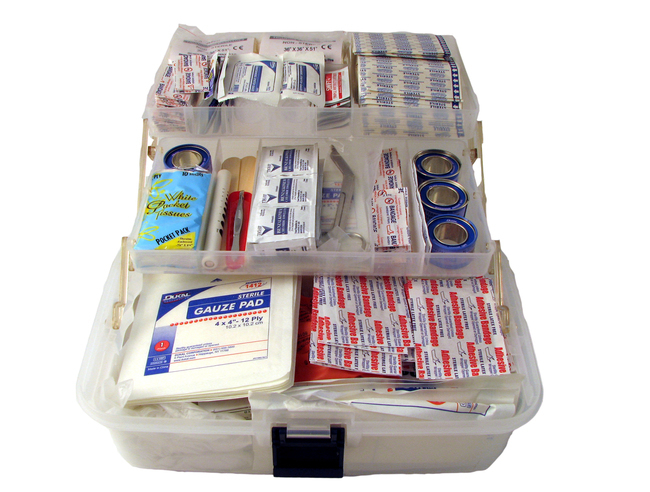
The larger kit should handle more than just cuts and scrapes. Bandages, gauze, roller wraps, tape, and non-stick dressings are the basics. Add tools like scissors, tweezers, and splints. Medications such as ibuprofen, acetaminophen, diphenhydramine, and loperamide are worth keeping. If you vacuum seal your supplies, they stay dry and pack down smaller, which is useful in a car. I’ve seen this trick make a bulky kit fit under a seat without taking up space.

For heavier situations, I like including a tourniquet for severe bleeding, but it’s important to know how to use it safely so you don’t cut off circulation unnecessarily. Some people go further and keep suture material, forceps, or even an epinephrine pen if they have a known severe allergy. Not everyone needs that level of equipment, but if you have training, it can make sense.

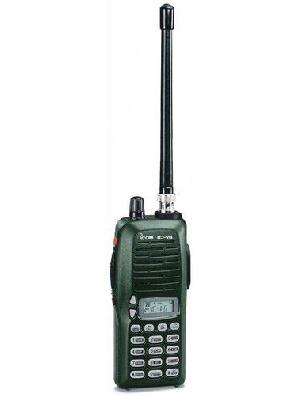
Since this is for your car, a few extras stand out. A flashlight or headlamp, glow sticks, a Sharpie, and waterproof paper are all small but handy. Road flares, a fire extinguisher, or even a ham radio can turn your kit into something that’s useful beyond just medical problems. I’ve spoken with drivers who said they didn’t think much about this until they were stuck on a mountain pass in winter. They ended up using their emergency bivvy sack and glow sticks before the med supplies ever came out.

Having two kits may feel like overkill, but in practice, it makes sense. One is portable and fast. The other is comprehensive and ready for when the situation is bigger than you expected.

This article is for general information only and not medical advice for any individual. If you’re building a kit and have questions about what you should carry, talk with your medical provider.

Wishing you the best of health,

Scott Rennie, D.O.
Board Certified in Obesity Medicine and Family Medicine

This blog is for educational purposes only and does not constitute individual medical advice. Always consult your own physician before making changes to your health, medications, or treatment plan.


Sources:
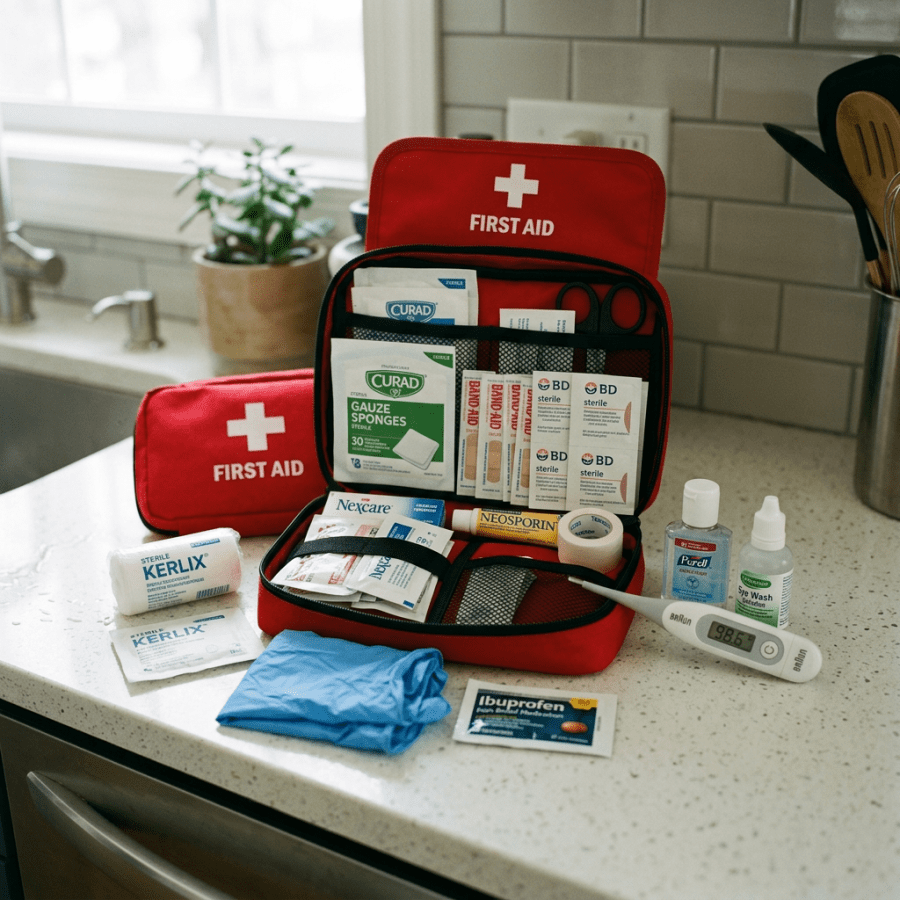
Open first aid kit with supplies on counter

Keep These Items in a Home First Aid Kit for Emergencies

Having a first aid kit at home sounds simple, but in practice most people I meet aren’t sure how to put one together. The kit you keep in your house won’t look the same as the one you carry in your car or take on a hike. The pre-made versions from a drugstore or REI are fine if you want something basic. But you can usually build one that’s more useful and better suited to your own needs.

Start with a container or bag that keeps everything in one place. Some people like roll-up organizers because they make it easier to see what you have. Inside, it helps to keep a variety of bandages and dressings. Simple gauze pads in a plastic bag are versatile. They don’t have to be sterile for everyday use, just clean. I’ve even seen patients use feminine hygiene pads as a low-cost way to handle heavier bleeding, and they can work well in a pinch.

Cleaning supplies matter too. If you have sterile saline, that’s ideal for rinsing out a wound, but even tap water is better than nothing when you’re on the go. Some people carry a dilute solution of hibiclens for extra disinfecting. Once the wound is clean, a non-stick dressing like Telfa or Tegaderm can prevent it from sticking to the bandage. Medical tape, elastic wraps, and roller gauze all help keep things in place.

Tools make a difference. A good pair of bandage scissors or a rescue cutter can save time. Sharp tweezers can pull out a splinter or a tick. A CPR mask is small but important, and a headlamp frees up your hands if you’re trying to help someone at night. I usually suggest gloves as well, since gloves protect both you and the person you’re helping.

It’s also useful to keep some basic medications and comfort items in the kit. Pain relievers like acetaminophen or ibuprofen, aspirin, antihistamines like diphenhydramine, and a small tube of hydrocortisone cream can go a long way. Glucose tablets are important for people with diabetes, and anti-diarrheal medication like loperamide can make a big difference if you’re traveling. Things like moleskin, blister pads, and hand wipes may sound minor, but when you’re out on a hike, they can turn a miserable situation into something manageable.

I’ve had patients tell me that what they reached for in a real emergency wasn’t always what they expected. One father shared that when his child fell on a trail, the only thing that stopped the bleeding until help arrived was a bandana and some tape he had in his pack. Later, he added gauze, a tourniquet, and an emergency blanket to his kit. It’s a good reminder that your kit should be practical, not just a collection of items.

What you include depends on where you are, who you’re with, and what you’re likely to face. Home kits can be bigger and more complete. Travel kits need to be light and portable. The best kit is the one that’s ready when you need it.

This is for general information only and not meant as medical advice for an individual. If you have questions about what’s right for you, talk with your medical provider.

Wishing you the best of health,

Scott Rennie, D.O.
Board Certified in Obesity Medicine and Family Medicine

This blog is for educational purposes only and does not constitute individual medical advice. Always consult your own physician before making changes to your health, medications, or treatment plan.


Sources: