
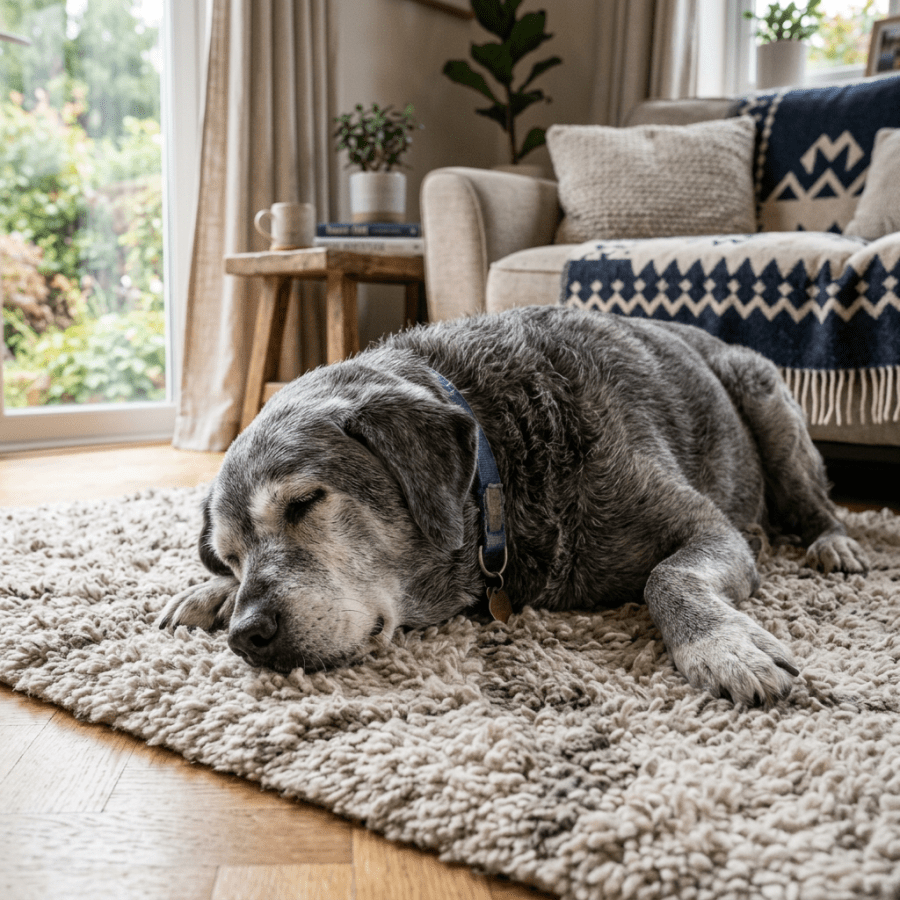
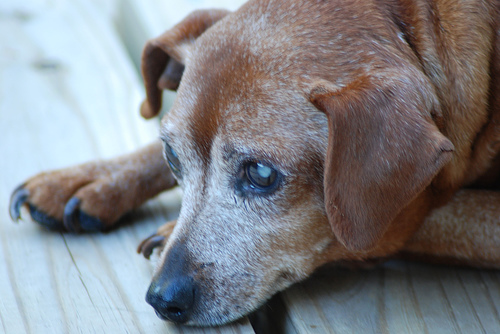
We’ve gotten better at spotting the signs of Alzheimer’s disease in people. But what about animals? Can we recognize something similar in them, and more importantly, is there anything we can do to slow it down?
Steve Dale wrote about this in USA Today Weekend, and it raises an important point. Cognitive dysfunction (CD) in pets is real. It’s not a brand-new condition, but as our dogs and cats live longer, we’re seeing it more often and learning how to identify it. Gary Landsberg, a veterinary behaviorist in Ontario, explained it simply: it has always been there, but now we’re better at recognizing the patterns. His current research is even looking at the condition in cats.
One easy way for pet owners to remember the common signs is with the acronym DISH. Disorientation shows up as confusion, like a dog trying to push through the wrong side of a doggie door. Changes in interaction are another clue, such as a once-social pet becoming withdrawn. Sleep problems may appear as cats yowling in the middle of the night or dogs pacing for hours with no clear reason. And then there’s house soiling, where a well-trained animal suddenly starts having accidents indoors.
That’s usually how CD is diagnosed—by ruling out other possible causes and then looking for these consistent patterns. Owners often describe little things at first that don’t seem connected, but over time they add up.
What can we do about it? Right now, the strongest evidence points to one very practical step: exercise. Professor Carl Cotman at the University of California, Irvine, who directs the Institute for Brain Aging and Dementia, has studied how dementia affects both people and animals. His work suggests the brain responds the same way in both cases, and physical activity makes a difference.
This is an area of ongoing research, but it’s also something pet owners can act on right now. Just as we encourage older adults to stay active, it looks like our aging pets may benefit from the same approach.
Scott Rennie, D.O.
Board Certified in Obesity Medicine and Family Medicine
This blog is for educational purposes only and does not constitute individual medical advice. Always consult your own physician before making changes to your health, medications, or treatment plan.
Sources:
-
Dale S. “Spotting signs of dementia in pets.” USA Today Weekend.
-
Landsberg GM, Veterinary Behaviorist, Cancog Technologies.
-
Cotman CW, University of California, Irvine, Institute for Brain Aging and Dementia.
 Doctor Rennie's Blog